Thomas Hewes Hinckley (1813-1896) American


Medium: Oil on canvas
Image Size: 32” x 48”
Frame Size: 42” x 58”
Signature: Signed lower right
Price: $8500
Biography/Statement
Born in 1813 in Milton, Massachusetts, Thomas Hewes Hinckley pioneered in painting cattle. His paintings Cattle Seeking Shelter from an Approaching Storm and Disputed Game were very popular. In 1845, he executed drawings of Daniel Webster’s famous Ayrshire dairy herd.
He studied art with William Mason in Philadelphia, and by 1833 was a professional painter as a portraitist and sign painter. He became much influenced by William Landseer’s animal paintings and the Flemish masters while visiting Europe in 1851. The Royal Academy in London exhibited two of Hinckley’s hunting scenes in 1858.
Living as a guest on the island of Naushon permitted him time for detailed studies of deer, and he produced many beautiful paintings of them. Traveling in California in 1870, Hinckley painted scenes of deer and elk on the rocky coastal promontories.
Artist Profile Page: Hinckley, Thomas Hewes / Categories: Landscape
Other Available Works by this Artist:
Similar Works

Bell, James Wethered

Busko, Bruce

Davis, William R.

Davis, William R.

Davis, William R.

Frost, George Albert

Graham, Laura Margaret

Hasbrouck, Dubois Fenelon

Hekking, Joseph Antonio

Hennings, Ernest Martin

King, Paul

Kingsbury, Edward R.

Koeppel, Erik

Koeppel, Erik

Krawczyk, Casey

Linson, Corwin Knapp

Loveridge, Clinton

McPhee, Patrick

Murphy, John Francis

Orlyk, Harry

Podlodowski, Jakub

Poskas, Peter

Sansariq, Lauren

Schreyer, Adolf

Shearer, Christopher

Sheehan, Dennis

Sheehan, Dennis

Sheehan, Dennis

Sheehan, Dennis

Sheehan, Dennis

Sheehan, Dennis

Sheehan, Dennis

Sheehan, Dennis

Sheehan, Dennis

Sheehan, Dennis

Sheppard, Warren

Tate, Gayle Blair

Voelcker, Rudolph

Walton, William

Witucki, Sean
Joseph Antonio Hekking (1830-1903) American


Medium: Oil on board
Image Size: 9” x 7”
Frame Size: 15” x 12.75”
Signature: Signed lower right
Price: $3200
Biography/Statement
J. A. Hekking was a versatile and talented landscape painter who lived in New York and Connecticut and was active from the early 1850’s to the later 1870’s. Hekking was a frequent participant at major exhibitions. His paintings were inspired by the Adirondack and White Mountains, Connecticut, New York views, and the Jersey shore. He worked with Frederick Rondeland. His paintings were actively acquired by important collectors including J.S. Farrand, Sarah Holderby, N.L. Lindsey, T. Foster, and George Watter Vincent Smith.
Hekking exhibited at the National Academy of Design (eight paintings between 1859 and 1875); the 1865 Michigan State Fair; the Crystal Palace in New York, 1853; Cosmopolitan Art Association, 1858; Utica Art Association, 1868; Buffalo Fine Arts Academy, 1869; Boston;1869; the Buffalo YMCA, 1861 and the Chicago Industrial Exposition in 1876. Hekking is listed in the exhibition records of the National Academy of Design, the Pennsylvania Academy of the Fine Arts, and the Groce and Wallace New York Historical Society Dictionary of Artists in America.
He is in the following books:
- Art and Artists in Connecticut, published in 1879, by H.W. French
- New Hampshire Scenery, published in 1985, by Catherine H. Campbell
- Artists of Early Michigan, published by the Wayne State University Press, Detroit, in 1975, compiled by Arthur Hopkin Gibson.
Artist Profile Page: Hekking, Joseph Antonio / Categories: Hudson River School, Landscape
Other Available Works by this Artist:
Similar Works
Bell, James Wethered
Busko, Bruce
Davis, William R.
Davis, William R.
Davis, William R.
Frost, George Albert
Graham, Laura Margaret
Hasbrouck, Dubois Fenelon
Hennings, Ernest Martin

Hinckley, Thomas Hewes
King, Paul
Kingsbury, Edward R.
Koeppel, Erik
Koeppel, Erik
Krawczyk, Casey
Linson, Corwin Knapp
Loveridge, Clinton
McPhee, Patrick
Murphy, John Francis
Orlyk, Harry
Podlodowski, Jakub
Poskas, Peter
Sansariq, Lauren
Schreyer, Adolf
Shearer, Christopher
Sheehan, Dennis
Sheehan, Dennis
Sheehan, Dennis
Sheehan, Dennis
Sheehan, Dennis
Sheehan, Dennis
Sheehan, Dennis
Sheehan, Dennis
Sheehan, Dennis
Sheehan, Dennis
Sheppard, Warren
Tate, Gayle Blair
Voelcker, Rudolph
Walton, William
Witucki, Sean
Rudolph Voelcker (1873-1962) American


Medium: Oil on canvas
Image Size: 30” x 36”
Frame Size: 39” x 45”
Signature: Signed lower left
Price: $6500
Biography/Statement
Rudolph A. Voelcker (Born 1873) was active/lived in New Jersey, New York. Rudolph Voelcker is known for Townscape, genre and rural landscape painting.
Artist Profile Page: Voelcker, Rudolph / Categories: Landscape
Other Available Works by this Artist:
Similar Works
Bell, James Wethered
Busko, Bruce
Davis, William R.
Davis, William R.
Davis, William R.
Frost, George Albert
Graham, Laura Margaret
Hasbrouck, Dubois Fenelon
Hekking, Joseph Antonio
Hennings, Ernest Martin
Hinckley, Thomas Hewes
King, Paul
Kingsbury, Edward R.
Koeppel, Erik
Koeppel, Erik
Krawczyk, Casey
Linson, Corwin Knapp
Loveridge, Clinton
McPhee, Patrick
Murphy, John Francis
Orlyk, Harry
Podlodowski, Jakub
Poskas, Peter
Sansariq, Lauren
Schreyer, Adolf
Shearer, Christopher
Sheehan, Dennis
Sheehan, Dennis
Sheehan, Dennis
Sheehan, Dennis
Sheehan, Dennis
Sheehan, Dennis
Sheehan, Dennis
Sheehan, Dennis
Sheehan, Dennis
Sheehan, Dennis
Sheppard, Warren
Tate, Gayle Blair
Walton, William
Witucki, Sean
Patrick McPhee (N/A) Contemporary, American
After Sanford Robinson Gifford's 'A Coming Storm'


Medium: Oil on panel
Image Size: 10.5” x 15.5”
Frame Size: 18” x 23”
Signature: Signed lower right
Price: $2800
Biography/Statement
Artist statement:
“My mother first introduced me to the wonderful, messy world of smearing oil pastels at the age of six. Something about trying to capture a memory on paper while avoiding school work just stuck with me and with encouragement from my family, I began exploring other mediums. Throughout my school years, I tested a wide variety of subjects, but my love forthe outdoors and fishing ultimately led me to depicting scenes of nature in my work. My education continued at the Art Institute of Pittsburgh, where I was fortunate to have many talented mentors helping me to develop as an artist. I have since applied these lessons in my pursuit of nature’s truth.
For years I have admired the Hudson River School of landscape painters. Their reverence for nature and warning of man’s impact on the environment have never been more relevant than now.
In the setting of our current environmental peril, it is my hope that my art can call some attention to the purity of an untouched land, and perhaps encourage others to help protect it from future harm.”
Artist Profile Page: McPhee, Patrick / Categories: Hudson River School, Landscape
Other Available Works by this Artist:
Similar Works
Bell, James Wethered
Busko, Bruce
Davis, William R.
Davis, William R.
Davis, William R.
Frost, George Albert
Graham, Laura Margaret
Hasbrouck, Dubois Fenelon
Hekking, Joseph Antonio
Hennings, Ernest Martin
Hinckley, Thomas Hewes
King, Paul
Kingsbury, Edward R.
Koeppel, Erik
Koeppel, Erik
Krawczyk, Casey
Linson, Corwin Knapp
Loveridge, Clinton
Murphy, John Francis
Orlyk, Harry
Podlodowski, Jakub
Poskas, Peter
Sansariq, Lauren
Schreyer, Adolf
Shearer, Christopher
Sheehan, Dennis
Sheehan, Dennis
Sheehan, Dennis
Sheehan, Dennis
Sheehan, Dennis
Sheehan, Dennis
Sheehan, Dennis
Sheehan, Dennis
Sheehan, Dennis
Sheehan, Dennis
Sheppard, Warren
Tate, Gayle Blair
Voelcker, Rudolph
Walton, William
Witucki, Sean
William R. Davis (1952-) Contemporary, American


Medium: Oil on board
Image Size: 8” x 6”
Frame Size: 12” x 10”
Signature: Signed lower right
Price: $1800
Biography/Statement
Bill Davis is a noted marine painter. He grew up in Hyannis Port, Massachusetts. He is a self-taught artist whose oil paintings typically capture the serene light of sunrise or sunset on the water. He employs many of the techniques traditionally used by American luminist painters to realize his personal vision, showing a marked preference for 19th century subjects.
In 1987, Davis had the first one artist show ever mounted at the Mystic Maritime Gallery in Mystic, Connecticut. All twenty of the works featured in that show were sold at the opening reception. In 1990, he received the Mystic Maritime Gallery Award of Excellence, and his painting entitled Calm Day Off Latimer’s Reef appeared on the cover of Mystic’s The Art of the Sea Calendar in 1993. Three of his paintings were also used in the book ‘Shipwrecks Around Boston’ by Cape Cod author, William P. Quinn. Rockport Publishers has included Boston Harbor at Sunset in a new book entitled, ‘A Gallery of Marine Art.’
Much of Davis’ early works pays homage to 19th century artists such as James Bard, Martin Johnson Heade, Antonio Jacobsen and Fitz Hugh Lane. He limits himself to about 30 colors in the palette of that period. He describes his style as a “conglomerate of a number of ideas I saw in other artists with my own refinements.” Over the years, he has incorporated his fascinations for the different techniques of these artists.
In a tribute to Martin Johnson Heade, which appeared in the July 1991 issue of American Artist magazine, Davis refers to sunset as “the hour when night usurps day.” He observes that this is the “best time of day for painters to capture the ‘inner state’ of a landscape,” and represents “an unequaled opportunity to sensitize the eye to the delicate mysteries of light and shadow.”
Although best known for his marine subjects, Davis strives to make his work accessible to those with a variety of tastes while expanding his own horizons as an artist. Following the painting of Davis’ Lilacs and Basket, featured on the poster for The Cahoon Museum of American Art 1992 exhibition entitled, “The Flowers of New England.”
Davis has shifted in the last few years to painting more landscapes on location. In the process, he has converted to plein air painting, partly influenced by his friendship with artists Joseph McGurl and Donald Demers.
Artist Profile Page: Davis, William R. / Categories: Landscape
Other Available Works by this Artist:
Davis, William R.
Davis, William R.
Similar Works
Bell, James Wethered
Busko, Bruce
Davis, William R.
Davis, William R.
Frost, George Albert
Graham, Laura Margaret
Hasbrouck, Dubois Fenelon
Hekking, Joseph Antonio
Hennings, Ernest Martin
Hinckley, Thomas Hewes
King, Paul
Kingsbury, Edward R.
Koeppel, Erik
Koeppel, Erik
Krawczyk, Casey
Linson, Corwin Knapp
Loveridge, Clinton
McPhee, Patrick
Murphy, John Francis
Orlyk, Harry
Podlodowski, Jakub
Poskas, Peter
Sansariq, Lauren
Schreyer, Adolf
Shearer, Christopher
Sheehan, Dennis
Sheehan, Dennis
Sheehan, Dennis
Sheehan, Dennis
Sheehan, Dennis
Sheehan, Dennis
Sheehan, Dennis
Sheehan, Dennis
Sheehan, Dennis
Sheehan, Dennis
Sheppard, Warren
Tate, Gayle Blair
Voelcker, Rudolph
Walton, William
Witucki, Sean
Dennis Sheehan (1950-) Contemporary, American


Medium: Oil on canvas
Image Size: 12” x 20”
Frame Size: 18” x 26”
Signature: Signed lower left
Price: $3200
Biography/Statement
Dennis Sheehan, born in Boston in 1950, is a member of the Guild of Boston Artists. His work is in major public and private collections., including the White House. Sheehan paints in the Barbizon mode with remarkable authority and faithful adherence to his 19th century precursors. In the tradition of the Tonalist painters, Sheehan creates landscapes of mood, affected by nature’s changing seasons.
“Today, in a cultural firmament that has been defined as Postmodern, a new generation of American painters is returning to the old landscape seeking a renewed vision. The cultural strategies that they employ are as diverse as any from the past; in most cases, these painters consciously strive to enter into a dialogue with the history of the White Mountains art. Their work, grounded in a sophisticated appreciation of what has come before, is in many cases deliberately discursive with a tradition that has been all but erased twice by historical and cultural forces.”
The contemporary work of Dennis Sheehan, for example, affords a great nineteenth-century-predecessor George Inness. Like Inness, whose influence is consciously acknowledged, Sheehan employs the dark palette and thickly pigmented surfaces of the French Barbizon School*. Maintaining a muted tonalist chromatic scheme, Sheehan, like Inness before him, has temerity to eschew picturesque scenery-his Conway Meadows avoids any reference to the traditional climax view of Mount Washington—in the interest of evoking atmospherics* and the appearance of the natural world as it is observed.
Optical truth combined with poetic resonance—the search for some ineffable quality of nature beyond words -constitutes the probity of his art. Yet, also like Inness, Sheehan’s paintings are produced in the studio. His work is the product of the conscious distillation of prior imagery ranging from the American Barbizon to the abstractions of Franz Kline. For all of the references to history—and there are multiple—there is no mistaking the artist’s debt to the more recent past. Without the legacy of action painting, Sheehan’s art would be less forceful and evocative than it is.”
Source: Guild of Boston Artists
“My goal is to have the painting emanate light, rather than be just a surface that records the reflections of light. This is why the shadow areas are important, for it is from them that this emanation proceeds. The light areas are focal points of this effort, but the power comes from the shadows.” – Dennis Sheehan
Artist Profile Page: Sheehan, Dennis / Categories: Landscape, Tonalism
Other Available Works by this Artist:
Sheehan, Dennis
Sheehan, Dennis
Sheehan, Dennis
Sheehan, Dennis
Sheehan, Dennis
Sheehan, Dennis
Sheehan, Dennis
Sheehan, Dennis
Sheehan, Dennis
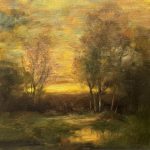
Sheehan, Dennis
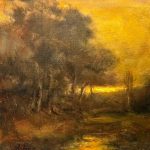
Sheehan, Dennis
Similar Works
Bell, James Wethered
Busko, Bruce
Davis, William R.
Davis, William R.
Davis, William R.
Frost, George Albert
Graham, Laura Margaret
Hasbrouck, Dubois Fenelon
Hekking, Joseph Antonio
Hennings, Ernest Martin
Hinckley, Thomas Hewes
King, Paul
Kingsbury, Edward R.
Koeppel, Erik
Koeppel, Erik
Krawczyk, Casey
Linson, Corwin Knapp
Loveridge, Clinton
McPhee, Patrick
Murphy, John Francis
Orlyk, Harry
Podlodowski, Jakub
Poskas, Peter
Sansariq, Lauren
Schreyer, Adolf
Shearer, Christopher
Sheehan, Dennis
Sheehan, Dennis
Sheehan, Dennis
Sheehan, Dennis
Sheehan, Dennis
Sheehan, Dennis
Sheehan, Dennis
Sheehan, Dennis
Sheehan, Dennis
Sheppard, Warren
Tate, Gayle Blair
Voelcker, Rudolph
Walton, William
Witucki, Sean
William R. Davis (1952-) Contemporary, American


Medium: Oil on panel
Image Size: 8” x 10”
Frame Size: 12” x 14”
Signature: Signed lower left
Price: $2200
Biography/Statement
Bill Davis is a noted marine painter. He grew up in Hyannis Port, Massachusetts. He is a self-taught artist whose oil paintings typically capture the serene light of sunrise or sunset on the water. He employs many of the techniques traditionally used by American luminist painters to realize his personal vision, showing a marked preference for 19th century subjects.
In 1987, Davis had the first one artist show ever mounted at the Mystic Maritime Gallery in Mystic, Connecticut. All twenty of the works featured in that show were sold at the opening reception. In 1990, he received the Mystic Maritime Gallery Award of Excellence, and his painting entitled Calm Day Off Latimer’s Reef appeared on the cover of Mystic’s The Art of the Sea Calendar in 1993. Three of his paintings were also used in the book ‘Shipwrecks Around Boston’ by Cape Cod author, William P. Quinn. Rockport Publishers has included Boston Harbor at Sunset in a new book entitled, ‘A Gallery of Marine Art.’
Much of Davis’ early works pays homage to 19th century artists such as James Bard, Martin Johnson Heade, Antonio Jacobsen and Fitz Hugh Lane. He limits himself to about 30 colors in the palette of that period. He describes his style as a “conglomerate of a number of ideas I saw in other artists with my own refinements.” Over the years, he has incorporated his fascinations for the different techniques of these artists.
In a tribute to Martin Johnson Heade, which appeared in the July 1991 issue of American Artist magazine, Davis refers to sunset as “the hour when night usurps day.” He observes that this is the “best time of day for painters to capture the ‘inner state’ of a landscape,” and represents “an unequaled opportunity to sensitize the eye to the delicate mysteries of light and shadow.”
Although best known for his marine subjects, Davis strives to make his work accessible to those with a variety of tastes while expanding his own horizons as an artist. Following the painting of Davis’ Lilacs and Basket, featured on the poster for The Cahoon Museum of American Art 1992 exhibition entitled, “The Flowers of New England.”
Davis has shifted in the last few years to painting more landscapes on location. In the process, he has converted to plein air painting, partly influenced by his friendship with artists Joseph McGurl and Donald Demers.
Artist Profile Page: Davis, William R. / Categories: Landscape
Other Available Works by this Artist:
Davis, William R.
Davis, William R.
Similar Works
Bell, James Wethered
Busko, Bruce
Davis, William R.
Davis, William R.
Frost, George Albert
Graham, Laura Margaret
Hasbrouck, Dubois Fenelon
Hekking, Joseph Antonio
Hennings, Ernest Martin
Hinckley, Thomas Hewes
King, Paul
Kingsbury, Edward R.
Koeppel, Erik
Koeppel, Erik
Krawczyk, Casey
Linson, Corwin Knapp
Loveridge, Clinton
McPhee, Patrick
Murphy, John Francis
Orlyk, Harry
Podlodowski, Jakub
Poskas, Peter
Sansariq, Lauren
Schreyer, Adolf
Shearer, Christopher
Sheehan, Dennis
Sheehan, Dennis
Sheehan, Dennis
Sheehan, Dennis
Sheehan, Dennis
Sheehan, Dennis
Sheehan, Dennis
Sheehan, Dennis
Sheehan, Dennis
Sheehan, Dennis
Sheppard, Warren
Tate, Gayle Blair
Voelcker, Rudolph
Walton, William
Witucki, Sean
Corwin Knapp Linson (1864-1934) American
Morning Light, 7am August 1946


Medium: Oil on canvas
Image Size: 20” x 24”
Frame Size: 26” x 30”
Signature: Signed lower right
Price: $4800
Biography/Statement
Corwin Knapp Linson, was an artist and illustrator who worked with his friend and roommate, Stephen Crane, author of the Civil War novella, The Red Badge of Courage. Crane read about the War in Century Magazine in Linson’s New York studio, declaring, “These fellows spout eternally of what they did, but they never say how they feel. They are as emotionless as rocks.” Linson would write a book about Crane, My Stephen Crane. Several versions of the manuscript, and photographs of Crane taken by Linson, are in the Special Collections Research Center of the Syracuse University Library in New York.
Artist Profile Page: Linson, Corwin Knapp / Categories: Landscape
Other Available Works by this Artist:
Similar Works
Bell, James Wethered
Busko, Bruce
Davis, William R.
Davis, William R.
Davis, William R.
Frost, George Albert
Graham, Laura Margaret
Hasbrouck, Dubois Fenelon
Hekking, Joseph Antonio
Hennings, Ernest Martin
Hinckley, Thomas Hewes
King, Paul
Kingsbury, Edward R.
Koeppel, Erik
Koeppel, Erik
Krawczyk, Casey
Loveridge, Clinton
McPhee, Patrick
Murphy, John Francis
Orlyk, Harry
Podlodowski, Jakub
Poskas, Peter
Sansariq, Lauren
Schreyer, Adolf
Shearer, Christopher
Sheehan, Dennis
Sheehan, Dennis
Sheehan, Dennis
Sheehan, Dennis
Sheehan, Dennis
Sheehan, Dennis
Sheehan, Dennis
Sheehan, Dennis
Sheehan, Dennis
Sheehan, Dennis
Sheppard, Warren
Tate, Gayle Blair
Voelcker, Rudolph
Walton, William
Witucki, Sean
Dennis Sheehan (1950-) Contemporary, American


Medium: Oil on canvas
Image Size: 25” x 30”
Frame Size: 33” x 38”
Signature: Signed lower left
Price: $3800
Biography/Statement
Dennis Sheehan, born in Boston in 1950, is a member of the Guild of Boston Artists. His work is in major public and private collections., including the White House. Sheehan paints in the Barbizon mode with remarkable authority and faithful adherence to his 19th century precursors. In the tradition of the Tonalist painters, Sheehan creates landscapes of mood, affected by nature’s changing seasons.
“Today, in a cultural firmament that has been defined as Postmodern, a new generation of American painters is returning to the old landscape seeking a renewed vision. The cultural strategies that they employ are as diverse as any from the past; in most cases, these painters consciously strive to enter into a dialogue with the history of the White Mountains art. Their work, grounded in a sophisticated appreciation of what has come before, is in many cases deliberately discursive with a tradition that has been all but erased twice by historical and cultural forces.”
The contemporary work of Dennis Sheehan, for example, affords a great nineteenth-century-predecessor George Inness. Like Inness, whose influence is consciously acknowledged, Sheehan employs the dark palette and thickly pigmented surfaces of the French Barbizon School*. Maintaining a muted tonalist chromatic scheme, Sheehan, like Inness before him, has temerity to eschew picturesque scenery-his Conway Meadows avoids any reference to the traditional climax view of Mount Washington—in the interest of evoking atmospherics* and the appearance of the natural world as it is observed.
Optical truth combined with poetic resonance—the search for some ineffable quality of nature beyond words -constitutes the probity of his art. Yet, also like Inness, Sheehan’s paintings are produced in the studio. His work is the product of the conscious distillation of prior imagery ranging from the American Barbizon to the abstractions of Franz Kline. For all of the references to history—and there are multiple—there is no mistaking the artist’s debt to the more recent past. Without the legacy of action painting, Sheehan’s art would be less forceful and evocative than it is.”
Source: Guild of Boston Artists
“My goal is to have the painting emanate light, rather than be just a surface that records the reflections of light. This is why the shadow areas are important, for it is from them that this emanation proceeds. The light areas are focal points of this effort, but the power comes from the shadows.” – Dennis Sheehan
Artist Profile Page: Sheehan, Dennis / Categories: Landscape, Tonalism
Other Available Works by this Artist:
Sheehan, Dennis
Sheehan, Dennis
Sheehan, Dennis
Sheehan, Dennis
Sheehan, Dennis
Sheehan, Dennis
Sheehan, Dennis
Sheehan, Dennis
Sheehan, Dennis
Sheehan, Dennis
Sheehan, Dennis
Similar Works
Bell, James Wethered
Busko, Bruce
Davis, William R.
Davis, William R.
Davis, William R.
Frost, George Albert
Graham, Laura Margaret
Hasbrouck, Dubois Fenelon
Hekking, Joseph Antonio
Hennings, Ernest Martin
Hinckley, Thomas Hewes
King, Paul
Kingsbury, Edward R.
Koeppel, Erik
Koeppel, Erik
Krawczyk, Casey
Linson, Corwin Knapp
Loveridge, Clinton
McPhee, Patrick
Murphy, John Francis
Orlyk, Harry
Podlodowski, Jakub
Poskas, Peter
Sansariq, Lauren
Schreyer, Adolf
Shearer, Christopher
Sheehan, Dennis
Sheehan, Dennis
Sheehan, Dennis
Sheehan, Dennis
Sheehan, Dennis
Sheehan, Dennis
Sheehan, Dennis
Sheehan, Dennis
Sheehan, Dennis
Sheppard, Warren
Tate, Gayle Blair
Voelcker, Rudolph
Walton, William
Witucki, Sean
Erik Koeppel (1980-) Contemporary, American
A View in the Shawangunk Mountains of New York


Medium: Oil on board
Image Size: 11” x 16”
Frame Size: 17” x 22”
Signature: Signed lower left
Price: $4800
Biography/Statement
Erik Koeppel (b.1980) was born in Oregon, and spent his childhood moving with his family through many of the most beautiful landscapes of North America from the Rocky Mountains, to Southern California, to the Appalachian Range. At the age of ten, he settled in the White Mountains of New Hampshire, where he drew obsessively from nature, and began to develop a love for the expressive potentials of traditional representation. Erik received his formal training from the Rhode Island School of Design followed by the New York Academy of Art, and an annual apprenticeship in Wiscasset, Maine with his professor and friend, Seaver Leslie. After copying extensively from the Italian Masters, he developed a body of work that has been exhibited and collected internationally, and represented across the United States. Koeppel’s mastery of traditional techniques has led him to become one of very few young contemporary artists whose work is regularly exhibited with historic masters of the 19th and early 20th Centuries. He has hung beside Thomas Cole, Winslow Homer, Edgar Degas, John Frederick Kensett, and George Inness, and has had the distinguished honor of entering numerous collections including artists of this caliber. American Artist, PleinAir Magazine, The American Art Review, and other respected publications have covered his progress.
EDUCATION:
2004 New York Academy of Art. Master of Fine Arts in Painting
2002 Rhode Island School of Design. Bachelor of Fine Arts
1999-2004 Painter/Professor Seaver Leslie of RISD, Apprenticeship
EXHIBITIONS:
~ “Reflecting the Real” Rehs Galleries, New York, NY
~ “Personal Favorites” Musem of White Mountain Art, Jackson, NH
~ “Erik Koeppel and Lauren Sansaricq” at The Art Place, Wolfeboro, NH
~ “Plein Air Rockies 2015” Cultural Arts Council of Estes Park, CO
~ “Secluded Glens and Noble Landscapes: Traditional White Mountain Art
~ Recaptured.” The Museums of the Bethel Historical Society, Bethel, ME
~ “History Meets the Arts” Lorde Nelson Gallery, Gettysburg, PA
~ “Treasured Places, Protected Spaces” Cheshire Historical, Keene, NH
~ “Members Exhibit” Guild of Boston Artists, Boston, MA
~ Palm Beach Jewelry, Art, and Antique Show McColl Art, Palm Beach, FL
~ Naples Art and Antiques Show with Rehs Galleries, Naples, FL
~ L.A. Art Show with Rehs Galleries and McColl Fine Art, Los Angeles, CA
~ Dallas International Art and Antuques Fair” with Rehs Galleries, Dallas, TX
~12th Annual White Mountain Art Show and Sale, Jackson Museum
~ Baltimore Summer Antiques Show, with Rehs Galleries, Baltimore, MD
~ “The Glory of the White Mountains: ErikKoeppel and Lauren Sansaricq
~ Newport Antiques Show, with Rehs Galleries, Newport, RI
~ Benefit Auction, The Thomas Cole House National Historic Site, Catskill, NY
~ Armory Spring Show, Park Avenue Armory, New York, NY
~ Avenue Show, with Rehs Galleries, New York, NY
~ Affordable Art Fair, with Rehs Galleries, New York, NY
~ Palm Beach Art and Antique Show McColl Fine Art Palm Beach, FL
~ Naples Art and Antiques Show with Rehs Galleries, Naples, FL
~ Merchandise Mart International Antiques Fair with Rehs Galleries, Chicago
~ L.A. Art Show with Rehs Galleries and McColl Fine Art, Los Angeles, CA
~ Dallas International Art and Antuques Fair” with Rehs Galleries, Dallas, TX
~ “Paysages, Erik Koeppel and Lauren Sansaricq,” Liaucous, France
~ “The New Hudson River School” Mark Gruber Gallery, New Paltz, NY
~ “Across this Great Land” Balcony House Gallery, Dallas TX
~ 11th Annual White Mountain Art Show and Sale, Jackson Museum, NH
~ Affordable Art Fair, with Rehs Galleries, New York, NY
~ Aspen Fine Art Fair, with McColl Fine Art, Aspen, CO
~ Baltimore Summer Antiques Show, with Rehs Galleries, Baltimore, MD
~ Newport Antiques Show, with Rehs Galleries, Newport, RI
~ Benefit Auction, The Thomas Cole House National Historic Site, Catskill, NY
~ Armory Spring Show, Park Avenue Armory, New York, NY
~ “Marine Art” The New Hampshire Antiques Coop Milford, NH
~ Merchandise Mart International Antiques Fair with Rehs Galleries, Chicago
~ L.A. Art Show with Rehs Galleries Los Angeles, CA
~ Palm Beach Jewelry, Art, and Antique Show McColl Fine Art, Palm Beach
~ Naples Art, Antique, and Jewelry Show with Rehs Galleries, Naples, FL
~ Theta Charity Antiques Show with McColl Fine Art Houston, TX
~ Dallas Art, Antique, and Jewelry Show with Rehs Galleries Dallas, TX
~ “White Mountain Art Show and Sale” Museum of White Mountain Art
~ 2nd Annual Plein Air Competition Exhibition, Sagamore Hill, NY
~ “Classical Contemporary” at McColl Fine Art, Charlotte, NC
~ “International Antiques Fair” with McColl Fine Art, Chicago, IL
~ “Landscapes” Wally Findlay Gallery, NY
~ “Hudson River School and White Mountain Art,” Milford, NH
~ “Hudson Valley Contemporary” at Boscobel House Museum, Garrison, NY
~ “Winter Wonderland” at Wally Findlay Gallery, New York, NY
~ “Summer Exhibition” The Banks Gallery Portsmouth, NH
~ “White Mountain Art” Jackson Historical Society, Jackson, NH
~ “ARC Salon 2011” Landscape Finalist
~ “Erik Koeppel: The American Landscape” at Wally Findlay Gallery
~ “White Mountain Art” Jackson Historical Society in Jackson, NH
~ “Winter Scenes” at Wally Findlay Gallery in New York, NY
~ “ARC Salon 2010” Landscape finalist
~ “Take Home a Nude Auction” at Sotheby’s New York, NY
~ “Institute of Classical Architecture and a Classical Benefit Auction” NYC
~ “Works on Paper” at Wally Findlay Gallery in New York, NY
~ “Fete de Swifty” Mayor Fund Benefit in New York, NY
~ “The Hampton Designer Showcase” with Bradley Thiergartner Interiors
~ “Art for the Young Collector” at Wally Findlay Gallery in Palm Beach, FL
~ “Summer Selections” at Wally Findlay Gallery in Palm Beach, FL
~ “ARC Salon 2009” Landscape finalist
~ “Erik Koeppel Artist Talk” at Wally Findlay Gallery in New York, NY
~ “Elegant Realism” at Wally Findlay Gallery in New York, NY
~ “Small Wonders” at Wally Findlay Gallery in New York, NY
~ “Contemporary Works” at Wally Findlay Gallery in New York, NY
~ “Art Hamptons” with Wally Findlay Gallery in Bridgehampton, NY
~ “Summer Salon” at the NYAA in New York, NY
~ “Take Home a Nude Auction” at Phillips de Pury & Company in New York
~ “Singular Creation” at Wally Findlay Gallery in New York, NY
~ “Color Sense” at Wally Findlay Gallery in Palm Beach, FL
~ “Art for the Young Collector” at Wally Findlay Gallery in New York, NY
~ “30th Annual Non-members Exhibition” at the Salmagundi Club, NYC
~ “Summer Landscapes” Group Show at the Jameson Gallery in Portland, ME
~ Paul Toner’s Showcase, in New York, NY
~ “Summer Exhibition” at Jameson Gallery in Portland, ME December
~ “Invitational Landscape Exhibition” at Jameson Gallery in Portland, ME
~ “Open Painting Exhibition” at the Providence Art Club in Providence, RI
~ “Master Thesis Exhibition” at NYAA in New York, NY
~ “What’s your point?” Metal-point Drawing Exhibition at NYAA in New York
~ “Hatching, the Art of Mark Making” at NYAA in New York, NY
~ “New England Exhibition” at the Cape Cod Art Association, Barnstable, MA
~ “RISD Senior Class Invitational Exhibition” in Providence, RI
~ “Five Person Show” at the ISB Gallery in Providence, RI.
~ “RISD Departmental Senior Show” at the Woods-Gerry Gallery, Providence
HONORS AND AWARDS:
2015 Plein Air Rockies 2015: 1st Place Quick Draw, Mayor of Estes Park
Award, People’s Choice Award, and Artist’s Choice Award. Estes Park, CO
Alden Bryan Memorial Award for Landscape, The Guild of Boston Artists
Accepted to the Guild of Boston Artists, Boston, MA
2014 American Fine Arts Award of Excellence, Art Renewal Center Salon
2013 2nd Prize Art Renewal Center Salon, Landscape, Port Reading, NJ
2012 Art Renewal Center Living Master, Port Reading, NJ
Judge, Teaching Studio of Art 2nd Annual Plein Air Competition, Sagamore Hill, NY
Hudson River Fellowship, Senior Fellow, Hunter, NY 2010-12
Art Renewal Center Salon Landscape finalist 2009, 2010, and 2011
Hudson River Fellowship: one month residency in Hunter, NY 2009
REPRESENTATION:
Rehs Galleries, New York, NY 2012-16
The Guild of Boston Artists, Boston MA 2015-16
Hildt Galleries, Chicago, IL 2013-16
McColl Fine Art, Charlotte, NC 2012-16
New Hampshire Antiques Co-op, Milford, NH 2012-16
Wally Findlay Gallery New York, Palm Beach, L.A. 2007-12
The Banks Gallery, Portsmouth, NH 2010-12
Jameson Gallery in Portland, ME 2006-07
STATEMENT:
In the act of painting, I have sought to discover that highest knowledge of Beauty, poetic and philosophical, that has been the common thread between all of the Great Masters of Art. I have spent hours staring at the finest masterpieces in museums worldwide in an effort to decipher that meditative effect that distinguishes greatness from proficiency, and have made the creation of that sentiment my central goal as an artist. Following this path has led me to study deeply the sciences of philosophy, design, linear perspective, anatomy, color, optics, architecture, botany, light and atmosphere with respect to their purposes in art, and I have built a foundation of consistent formal principles that work in harmony to illuminate meaning in painting. As my subject, I have chosen the universal human condition in this world, and have sought wherever possible to discard the sociopolitical fashions of contemporary culture in favor of those enduring sentiments that we all encounter in life. It is my belief that to experience the Beauty of our existence here in this magnificent landscape is the only way to happiness. My intention as an artist is to share that Beauty.
Artist Profile Page: Koeppel, Erik / Categories: Landscape
Other Available Works by this Artist:
Koeppel, Erik
Similar Works
Bell, James Wethered
Busko, Bruce
Davis, William R.
Davis, William R.
Davis, William R.
Frost, George Albert
Graham, Laura Margaret
Hasbrouck, Dubois Fenelon
Hekking, Joseph Antonio
Hennings, Ernest Martin
Hinckley, Thomas Hewes
King, Paul
Kingsbury, Edward R.
Koeppel, Erik
Krawczyk, Casey
Linson, Corwin Knapp
Loveridge, Clinton
McPhee, Patrick
Murphy, John Francis
Orlyk, Harry
Podlodowski, Jakub
Poskas, Peter
Sansariq, Lauren
Schreyer, Adolf
Shearer, Christopher
Sheehan, Dennis
Sheehan, Dennis
Sheehan, Dennis
Sheehan, Dennis
Sheehan, Dennis
Sheehan, Dennis
Sheehan, Dennis
Sheehan, Dennis
Sheehan, Dennis
Sheehan, Dennis
Sheppard, Warren
Tate, Gayle Blair
Voelcker, Rudolph
Walton, William
Witucki, Sean
- 1
- 2
- 3
- …
- 6
- Next Page »